
Water Damage Restoration Near Williams Field Road in Gilbert
Our team handles emergency water damage, fire damage cleanup, and mold remediation with rapid response, advanced drying equipment, and proven restoration methods to protect your property and prevent further damage.
What’s Covered on This Page
- Water Damage Restoration for Homes Near Williams Field Road
- How Our Team Reaches the Williams Field Road Area
- What 1995-Built Single-Family Homes Tell Us About Water Damage Risk
- My home near Williams Field Road was built in the mid-1990s — does that make it more likely to have hidden water damage?
- Does it matter that my Williams Field Road home sits on a slab when water damage happens?
- During monsoon season, should Williams Field Road homeowners do anything before calling for water damage help?
Water Damage Restoration for Homes Near Williams Field Road
Every house along Williams Field Road is single-family detached. Every one. That matters when water shows up, because each home has its own roofline, slab, and plumbing, and the damage spreads in a pretty predictable way out here.
Most of these homes went up around 1995. So they are about 30 years old now. We see a lot of mid-90s supply line issues in Gilbert AZ, and a slow leak behind a bathroom wall can sit there for weeks before the baseboards finally start to swell.
Most homeowners here stay put. Over 80% own their homes. You are not waiting on a landlord. You are standing in your own hallway at 2 a.m. watching water move across tile, and that is a sick feeling.
That is where water damage restoration near Williams Field Road Gilbert AZ starts for most of our calls. Not a huge flood. Just a quiet failure behind a wall or under a cabinet. Slab homes spread water fast. It runs under carpet. It wicks into trim. By the time you spot a stain, the wet drywall is already behind you. (That part catches people off guard all the time.)
Here is what we typically see in these neighborhoods:
- Water heater failures in garage alcoves that push water under the shared wall
- Roof leak water damage after summer storms crack tile or push water past old flashing
- Slow kitchen supply line leaks that soak particle board cabinets before anyone smells anything off
- Monsoon flood cleanup where water slips in through garage seals on flat lots south of Williams Field
We are out in this area a lot. The stretch between Lindsay and Higley along Williams Field Road keeps us busy, especially July through September. Monsoon runoff does not care about landscaping, it pools where the grade is flat and finds the weak spot.
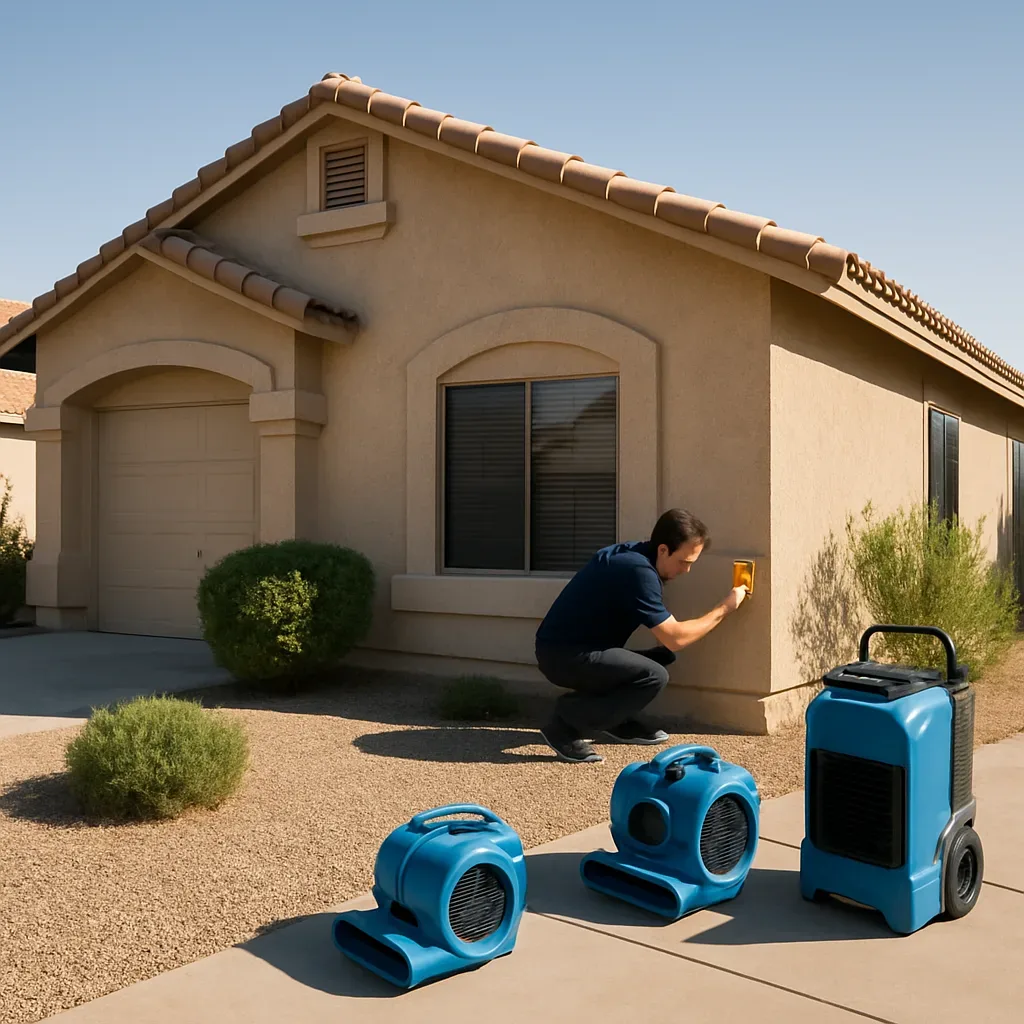
Structural drying is the part most people underestimate. You mop up the floor and think it is done. But stucco walls and slab construction hold moisture in places you cannot see. We place equipment where the water traveled, not just where it is sitting. Most homes here use 2×4 framing with paper-faced drywall, and once moisture gets into that paper, mold can start fast. You do not want to wait around on that.
The homes along Williams Field Road are not starter houses anymore. Median values in this tract sit around $544,300. That is real money sitting under wet drywall. Fast emergency water extraction saves flooring, saves drywall, and keeps a small problem from turning into a bigger one.
But these homes dry out well when we catch them early. The desert air helps once we open the wall cavity and get airflow moving. Tile and engineered wood give us solid surfaces to work with. We can usually target the damage without tearing up an entire room if we get there in time.
How Our Team Reaches the Williams Field Road Area
Our shop sits at 1733 E Aspen Way in Gilbert. That puts us north of the Williams Field Road corridor, and the drive is short.
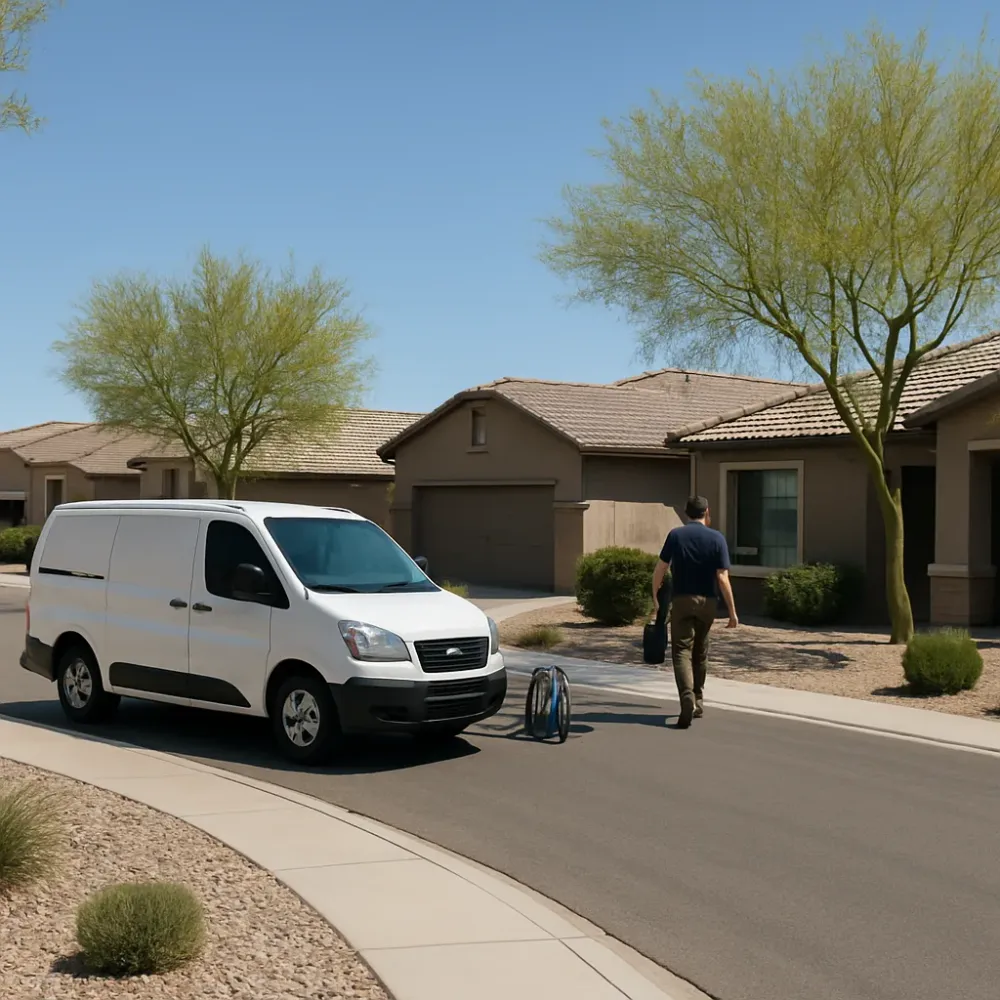
Here is the route our crews usually take:
- Head south on Lindsay Road from our office near Aspen Way.
- Keep going past Guadalupe Road and the 202 freeway interchange.
- Turn east on Williams Field Road.
- From there we can reach most neighborhoods along the corridor in under 15 minutes, even when afternoon traffic backs up near Santan Village.
If a call comes in from closer to Higley Road, we sometimes cut over on Pecos Road instead. It saves a few minutes when Lindsay gets jammed near the freeway ramps. We drive these roads all the time, so where the slow spots are.
That quick response matters. A burst pipe in one of the single-family homes along this corridor can dump a lot of water onto a slab floor in less than an hour. Every minute we save is a minute sooner our extraction equipment starts pulling moisture out of your house. And in a neighborhood where the typical home is worth well above half a million dollars, protecting that investment is the whole point.
Most calls from this area come from the subdivisions between Lindsay and Higley, south of the SanTan Freeway. These are established neighborhoods with mature landscaping and families who have been in the same house for years. The homes were built around 1995, so the original water heaters and supply lines are past their prime. We see that pattern a lot. (By the way, that is why we ask about the age of the home right away.)
A homeowner notices a damp spot on the ceiling one morning. By the time they call, the drywall is soft. We get there fast, set up structural drying equipment, and start pulling moisture before it spreads into the framing. Ceiling water damage repair goes a lot smoother when we catch it early.
And because over 80% of the homes in this tract are owner-occupied, we are usually talking straight to the person who lives there. No waiting on a property manager. You call, we show up, we get started. Simple.
During monsoon season this stretch of Gilbert gets hit hard. The drainage along the road handles most of the runoff, but the neighborhoods set back from the main corridor sit lower in spots. Water pools against foundations. It slips into garages. We have done flood cleanup on the same blocks two summers in a row because the grading keeps sending water toward the same houses.
But it is not only storms. We get calls year-round from this part of Gilbert. Supply line failures, water heater leaks, dishwasher hose blowouts. These are all single-family detached homes, so we can set up fans and dehumidifiers in every affected room without working around a neighbor’s unit. That saves time and keeps the job cleaner.
If you are near Williams Field Road and something goes wrong, we are close. That is not a sales pitch. It is just geography.
What 1995-Built Single-Family Homes Tell Us About Water Damage Risk
Every house along Williams Field Road is a single-family detached home. Every one in this tract. That is not how every part of Gilbert is laid out, and it changes the kind of restoration work we do here.
The typical home in this neighborhood was built around 1995. That puts most of the construction in a very specific window for building codes, materials, and plumbing standards. these houses well because we are inside them regularly.
Here is what stands out about mid-1990s builds in this part of Gilbert:
- Polybutylene or early CPVC supply lines that get brittle after 25+ years in desert heat
- Concrete slab foundations with no basement or crawl space, so leaks pool under flooring before you notice
- Original water heaters that were replaced once, maybe twice, and the second replacement sometimes sits on aging drain pans
- Stucco exteriors that develop hairline cracks near rooflines after years of heat and cooling swings
That last one catches people off guard. A monsoon pushes rain sideways into a stucco crack near the eave, the water tracks down inside the wall cavity, and the homeowner does not see it until the baseboard paint starts bubbling three days later. We have pulled drywall in homes along this corridor and found moisture damage that had been building for weeks behind the surface.
Slab-on-grade construction is the big one. Most homes in the Phoenix metro sit on slabs, but the 1995-era slabs near Williams Field Road do not have modern moisture barriers underneath. A supply line leak under the slab sends water outward in every direction. You might notice tile grout darkening in one room. By then the moisture has already moved under two or three rooms. Structural drying on a slab takes real equipment and patience, not a box fan and hope.
And these are owner-occupied homes. About 83% of residents in this tract own their property. So the person calling us is the person living with the mess. They care about getting it right. They are not filing a claim for a tenant. They are standing in their own kitchen watching water seep out from under the dishwasher.
One scenario we see a lot in this neighborhood involves the laundry room. These 1995-era floor plans often tuck the washer and dryer into a small closet off the hallway or garage entry. The hoses crack. Sometimes the drain line backs up. Either way, the water hits the hallway and rolls toward the living area before anyone notices. We get the call, bring in extraction equipment, pull the baseboards, and start structural drying on the same visit.
But here is the part most homeowners around here do not think about. A house built in 1995 is now 30 years old. The original plumbing was not built to last forever. Neither were the shut-off valves. We have responded to burst pipe cleanup jobs along Williams Field Road where the homeowner tried to shut off the valve and the handle just spun. Corroded open.
Homes in this price range often have upgraded kitchens and bathrooms over the years. New granite, new fixtures, maybe a full remodel. The supply lines behind the wall may still be original. That gap between what you see and what is behind the drywall is where water damage restoration starts for most families in this neighborhood.
Knowing the build year tells us where to look first. Knowing the neighborhood tells us what to expect when we get there.
Frequently Asked Questions
Common questions about water damage restoration near williams field road gilbert az services in AZ
My home near Williams Field Road was built in the mid-1990s — does that make it more likely to have hidden water damage?
Yes, and it is one of the first things we ask about when you call. Homes built around 1995 are now 30 years old, which means original supply lines, water heaters, and flange seals are all past their expected lifespan. We see slow leaks behind bathroom walls and under kitchen cabinets regularly in this corridor. By the time you notice swollen baseboards, moisture has usually been sitting there for weeks.
Does it matter that my Williams Field Road home sits on a slab when water damage happens?
It matters a lot. Slab construction spreads water fast and quietly. It moves under carpet, wicks into trim, and soaks into paper-faced drywall before you see a single stain. Because every home along this corridor is single-family detached, we can set up drying equipment in every affected room without working around shared walls or neighboring units. That makes targeted drying much more effective when we catch it early.
During monsoon season, should Williams Field Road homeowners do anything before calling for water damage help?
Stop the water source if you safely can, then call right away. The neighborhoods set back from the main corridor sit lower in spots, and pooling water finds garage seals and foundation gaps fast. Do not wait to see if it dries on its own — stucco walls and slab floors hold moisture long after the surface looks dry. The sooner we get airflow and extraction equipment running, the better chance you have of saving flooring and drywall.
Ready to Get Started?
Call now. Call +1-480-956-3500 today.