
Water Damage Restoration in South Tempe AZ
Flow State Restoration does water damage restoration for homeowners in south Tempe. Homes were built from mid 80s through early 2000s. Solid houses built for families are running into issue now. Call Jesse if you need help
Common Water Damage Issues in South Tempe
South tempe homes are around 25 to 40 years old depending on the neighborhood. Heres what we keep running into.
Supply line failures
The braided steel supply lines that connect to toilets, sinks, washing machines, dishwashers. They were installed when the home was built and most people never think about them. After 20 to 30 years the rubber inside degrades. The braiding corrodes. One fails and its a constant stream of water until somebody shuts off the valve. If nobody is home thats hours of water running.
We see this alot in south Tempe. Family comes home from work and school and theres water all over the kitchen or bathroom. Supply line under the sink gave out while nobody was there.
Leaks from Washing machine
Families often do a lot of laundry. The rubber hoses behind the washing machine crack. The connections loosen over time from the vibration. Water sprays out behind the machine and runs along the wall. Most laundry rooms in south Tempe homes dont have floor drains so it spreads into hallways and bedrooms.
Upstairs laundry rooms are worse. Some of the newer south Tempe builds from the late 90s and 2000s put laundry upstairs. Great for convenience. Bad when a hose blows. Water goes through the subfloor and into the ceiling below.
Water heater failures
Standard tank water heaters last maybe 10 to 12 years in Arizona. The heat and hard water shorten their life. Alot of south Tempe homes are on their second or third unit now. People forget about the water heater until it fails. Tank corrodes from the inside. Starts leaking slow or gives out all at once.
Monsoon flooding
South Tempe gets hit hard during monsoon season. July through September. Those big summer storms dump rain fast. Alot of these neighborhoods have block walls that trap water in the yard. It pools against the back of the house. Comes in under sliding glass doors. Seeps through stucco cracks near ground level. Low spots in the yard flood and the water has nowhere to go except toward the foundation.
Pool equipment leaks
So many homes down in south Tempe have pools. And the thing nobody tells you is that after 15, 20 years all that equipment outside starts failing. Pump seals go, filter housings crack, valves start weeping. Just a slow drip drip drip on the concrete pad out back. Nobody’s checking that stuff. Out of sight out of mind right? But here’s the thing — that water doesn’t just evaporate. It gets under the slab. Finds every little crack. Next thing you know there’s moisture coming up through the tile in your living room and you’re like where the hell is this coming from. Nine times out of ten it’s the pool equipment. People never make that connection.
AC condensate line clogs
Your AC is running like 6, 7 months straight out here. April to October, basically no break. All that moisture has to go somewhere and it goes through the condensate line. Problem is that line gets gunked up — algae, mineral crud, whatever’s floating around in there. Once it clogs the water’s got nowhere to go so it backs right up out of the air handler. And where’s the air handler? Closet. Garage. Somewhere you’re not looking every day.
How Water Damage Spreads in South Tempe Homes
A lot of south Tempe homes have open floor plans. Kitchen flows into the family room. No walls or thresholds to stop water from spreading. Thats great for living in but terrible when water gets loose.
A kitchen supply line breaks and water runs across the tile into the living room carpet. Soaks into the padding. Goes under baseboards and into the next room. Carpet padding holds water like a sponge. You can walk on it and not even feel wet but underneath its soaked.
Two story homes are the worst. You get a leak upstairs — bathroom, laundry room, whatever — and that water runs along the ceiling joists and just travels. Shows up through light fixtures. Drips out of vents. Sits on top of the drywall until the whole thing sags and eventually gives. One leak upstairs and now you’re dealing with damage on both floors. Seen it so many times.
Mold starts growing in about 2 days if materials stay wet. Behind cabinets. Inside wall cavities. Under the carpet padding. Arizona is dry outside but inside a wet wall its plenty humid enough for mold.
Our Water Damage Restoration Approach
Family homes in south Tempe are well taken care of. People put alot into these houses. We respect that and work accordingly.
We have IICRC Certified technicians, and advanced equipment to handle any water damage restoration.
Inspection
Moisture meters and thermal cameras are used to see where the water went. They show whats happening behind walls and under floors. In south Tempe homes we check the common problem areas first. Under kitchen and bathroom sinks. Behind the washing machine. Around the water heater. Near the pool equipment wall.
Two story homes get extra attention. Water from upstairs can travel inside walls and end up in rooms that seem completely unrelated to the leak source.
Water Extraction
Getting water out fast makes a huge difference. Every hour counts. Industrial vacuums and pumps are used to take water out of carpets, padding, hard floors.
Drying
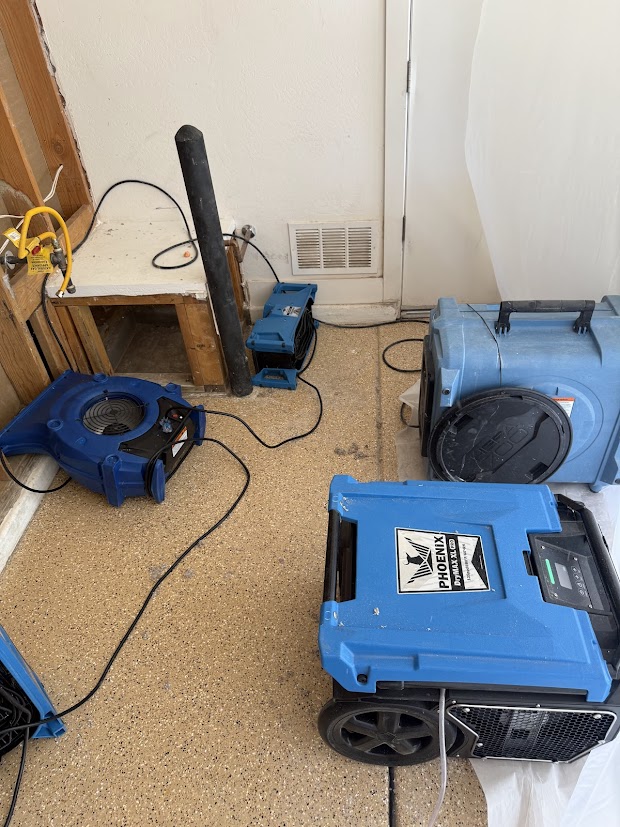
Drying takes a few days, usually 2-3 days. We set up commercial air movers and dehumidifiers. They run pretty much nonstop. Loud, yeah, but they pull moisture out of materials that would take weeks to dry on their own.
We check moisture readings daily until everything comes back to normal levels. We pull equipment when the readings say its dry. Not before.
Repair & Remodeling
We help with structural repairs and remodeling to ensure that your home is back as new. This could involve flooring, plumbing, roofing and painting repairs.
South Tempe homes are generally in good shape so repairs are usually straightforward. Matching existing tile or wood flooring. Replacing sections of drywall. Repainting. If the water damage took out carpet that was due for replacement anyway some people upgrade to tile or luxury vinyl during the rebuild. We handle all of that.
Serving Homes in South Tempe
We’re provide water damage restoraiton for homes in south Tempe.
We also provide residential water damage restoration and water extraction in Warner and Ray corridor, between McClintock and Kyrene. Over by Rural and Baseline. If your kids go to Kyrene de la Mirada or Kyrene del Pueblo or any of the Kyrene schools, you’re in our backyard. We also get calls from north Chandler right along the border, down into Ahwatukee, and up through central Tempe closer to ASU.
Frequently Asked Questions About Water Damage Restoration in South Tempe
We have tile floors. Does water damage still affect them?
Tile itself is fine. Grout is the problem. Grout absorbs water and lets it through to the subfloor underneath. The thin set mortar under the tile can hold moisture too. So your tile looks fine on top but underneath the subfloor is getting wet and staying wet. Thats where mold starts. We check under tile with moisture meters to see whats really going on.
Is mold really a risk in Arizona? Its so dry here.
Outside yes its dry. Inside a wet wall or under wet carpet its not dry at all. Mold doesnt care about the weather outside. It cares about the moisture right where its growing. Wet drywall in a closed up house with the AC running is a perfect mold environment. 48 hours is all it takes.
How long will the drying equipment need to run?
This primarily depends on what got wet and how much water got in. Carpet and padding dry faster than drywall and wood framing. We check daily and pull the equipment when readings come back normal. Not before.
Need Water Damage Restoration Near South Tempe AZ?
Flow state restoration handles everything from emergency water extraction to complete restoration in South Tempe while working directly with your insurance company to maximize coverage.