
Flood Damage Repair near Gilbert and Tempe Border
Our team handles emergency water damage, fire damage cleanup, and mold remediation with rapid response, advanced drying equipment, and proven restoration methods to protect your property and prevent further damage.
What’s Covered on This Page
- Flood Damage Repair for Homes Along the Gilbert-Tempe Border
- How Our Team Reaches the Gilbert-Tempe Border Area
- What Older Slab Homes in This Corridor Need After a Flood
- Why do homes near the Gilbert-Tempe border get water inside the walls even after a small storm?
- My home near Cooper Road has a converted garage — should I be worried about floor drains after a monsoon?
- How do the winding streets south of Guadalupe near the Gilbert-Tempe border affect how quickly your crew can start drying?
Flood Damage Repair for Homes Along the Gilbert-Tempe Border
That stretch where Gilbert meets Tempe catches water fast. Homes along Baseline Road and south of the 60 sit low, and monsoon runoff piles up in a hurry.
We’ve pulled wet carpet out on Ray Road. We’ve dried garages near Cooper and Guadalupe. And we’ve helped families on Warner Road after water slipped in through the back patio door before they even knew the storm had hit hard.
Flood damage repair near Gilbert and Tempe border is something we handle a lot from July through September. But it is not just monsoons. Burst pipes in older homes near the border keep us busy year-round, and slab foundations on the Gilbert side do water no favors.
Homes in this part of Gilbert are often single-story builds from the late ’90s and early 2000s. Stucco outside. Tile or laminate over concrete slab inside. That setup looks solid. It still lets water in. Once moisture gets under tile, it moves into drywall and baseboards before most homeowners spot a thing.
Here’s what makes this area tricky:
- Flat lot grading that sends water toward foundations
- Older landscaping with roots that crack irrigation lines underground
- HOA common areas that drain toward backyards
- Concrete block walls that trap standing water after storms
We see this after every monsoon season. A homeowner near the San Tan 202 interchange calls about a musty hallway. They think it is just humidity. We check the baseboards, and the drywall is soaked two feet up. That’s flood damage from a storm days ago, still sitting inside the wall.
And that’s the part people miss. The desert dries the surface fast. Ninety minutes of sun and the yard looks fine. Inside the wall, the moisture stays put. It feeds mold. It softens drywall. Doors start sticking, and nobody knows why.
We start with structural drying and moisture mapping. We do not guess. We measure. If the water came from a sewage backup through a floor drain, that’s a different job than rain through a sliding door. Gilbert-Tempe border homes with converted garages run into floor drain trouble more than most people expect (especially after one of those hard, fast summer storms).
So if your place smells off after a storm, or your baseboards feel soft when you press them, do not wait. The homes along this border corridor sit in a spot where water sneaks in quietly. By the time you notice it, the clock has already been running for days.
How Our Team Reaches the Gilbert-Tempe Border Area
Our office sits at 1733 E Aspen Way in Gilbert, up near the 202 and Val Vista. When you call from the Gilbert-Tempe border, we are already close.
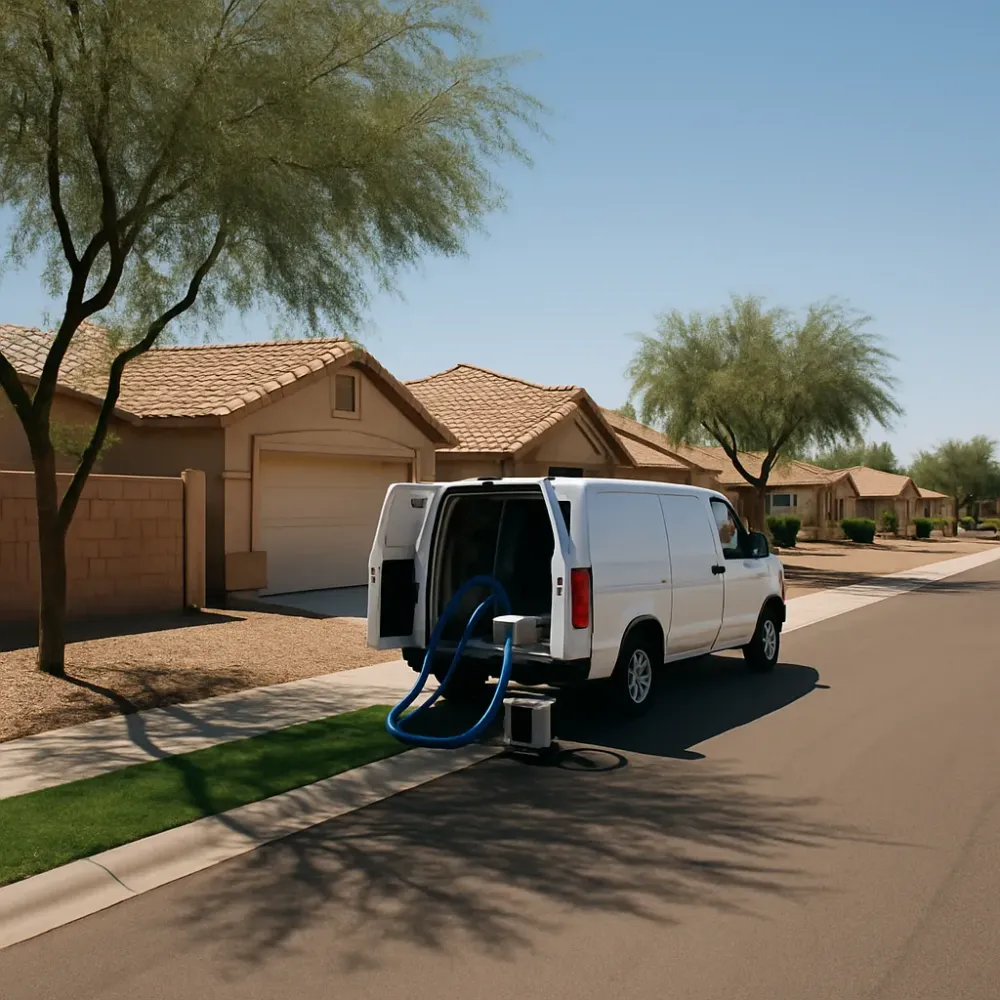
Here’s the typical route our crews take to reach you:
- Head south on Val Vista Drive from E Aspen Way.
- Pick up the 202 East (Santan Freeway) heading westbound toward Tempe.
- Exit at Alma School Road or McClintock Drive, depending on which side of the border you’re on.
- Cut south on surface streets toward Guadalupe Road or Baseline Road to reach homes in the border neighborhoods.
Most days, that is a 15-to-20-minute drive. Afternoon traffic on the 202 can stretch it some, and the backroads help. If the Price Road interchange clogs up, we’ll drop down to Elliot or Warner and cut across. We’ve done it enough to know the shortcuts.
And time matters more than distance. A burst pipe under a kitchen sink can push water into other rooms in under an hour. So we do not sit around waiting for traffic to clear.
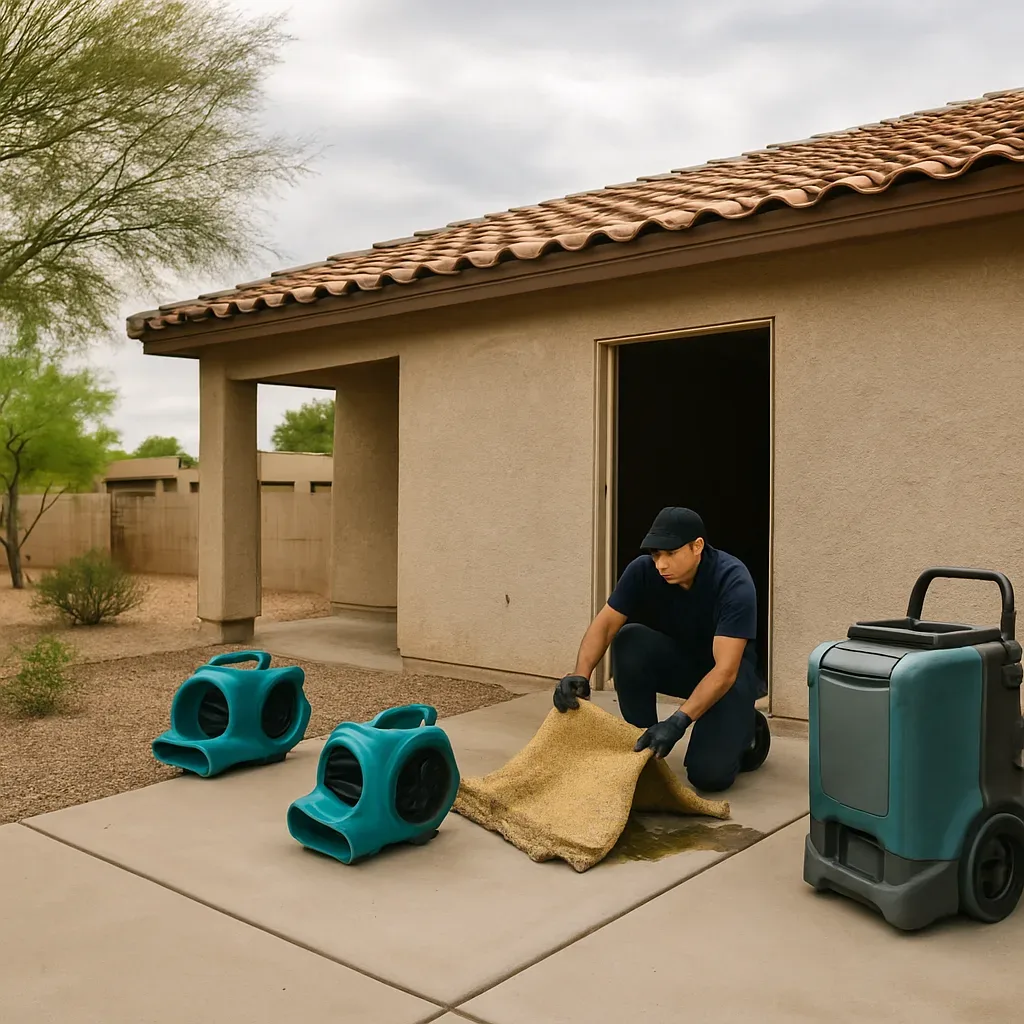
Our trucks stay loaded with extraction equipment, commercial dehumidifiers, and moisture meters. We do not swing by a warehouse first. We roll straight from Aspen Way to your front door, ready to start emergency water extraction the moment we get there.
The streets along the Gilbert-Tempe border can be a pain if you do not know them. Guadalupe Road shifts fast once you cross from Tempe into Gilbert. The neighborhoods south of Guadalupe near Cooper Road have those winding loops that GPS misses sometimes. We’ve been running flood damage repair calls through this corridor for years (Longbow Parkway dead-ends in a way that catches people off guard, and the cul-de-sacs off Baseline east of the 101 still trip up delivery drivers).
That local knowledge saves time.
If you’re closer to the Tempe side near Rural Road and Guadalupe, we’ll sometimes hop on the 101 south to the 202 connector instead. It shaves a couple minutes and keeps us out of the surface street mess around Arizona Mills. Every route decision comes down to one thing: getting structural drying equipment into your home before the damage spreads deeper into subfloors and wall cavities.
We’re out in this part of Gilbert a lot. The homes along the border keep us busy, especially during monsoon season when storm runoff overwhelms drainage along the canal paths south of Baseline. One hard rain, and we’ll get three or four calls from the same zip code in one evening.
So if you’re standing in your living room watching water creep across the tile, know this: we’re not far. And we already know how to get to you.
What Older Slab Homes in This Corridor Need After a Flood
Most homes along the Gilbert-Tempe border sit on concrete slab foundations. No basement. No crawl space. That sounds simple. It is not. Water has nowhere to drain, so it spreads.
We see this all the time between Baseline Road and Guadalupe. A monsoon dumps hard rain, the ground cannot take it fast enough, and water pushes under doors or seeps through garage seals. On a slab, it fans across the floor in minutes.
Here’s what most people do not realize. The damage is already inside the wall before you finish mopping the floor.
Drywall acts like a sponge. It pulls moisture upward. In a slab home along this corridor, we routinely find moisture 12 to 18 inches above the visible water line. You may not see it. You may not smell it yet. Mold likes that head start.
Older homes in this stretch have a few things working against them during flood damage repair:
- Original drywall from the 1980s and 1990s that drinks water fast
- Carpet padding glued right to the slab, trapping moisture underneath
- Older plumbing connections near the slab that crack after heavy soil saturation
- Flat or low-slope grading that sends runoff toward the house
And tile floors can fool you. The surface looks dry, the grout feels fine. Underneath, thin-set mortar holds water like a pan. We’ve pulled up tile weeks after a flood and found standing moisture below it.
Structural drying on a slab home takes a certain approach. You cannot just point fans at the floor. We place drying equipment to pull moisture through the slab itself and the materials sitting on top of it. The goal is to get readings back to normal before anything starts to break down.
Hardwood floor water damage repair comes up here too. Some remodeled homes near the border have engineered hardwood over the original slab. That material cups and buckles fast when moisture gets trapped beneath it. Quick extraction matters. Controlled drying matters too. Rush it, and the wood stays warped.
We run into homeowners who clean the visible water and think they are done. A week later, they notice a musty smell near the baseboards. Then they call us. By that point, we are doing mold inspection and testing on top of the original flood damage repair. More work. More time. More stress.
So if you’re in a slab home near the Gilbert-Tempe border and water came in, do not wait. The slab holds moisture longer than you’d expect, and the damage grows quietly underneath everything you can see.
Frequently Asked Questions
Common questions about flood damage repair near gilbert and tempe border services in AZ
Why do homes near the Gilbert-Tempe border get water inside the walls even after a small storm?
Flat lot grading along this corridor sends water straight toward foundations instead of away from them. The desert surface dries fast, so your yard looks fine within an hour. But inside slab-foundation homes near Baseline Road and Guadalupe, moisture keeps moving up through drywall long after the storm passes. By the time baseboards feel soft or doors start sticking, the damage has been building for days.
My home near Cooper Road has a converted garage — should I be worried about floor drains after a monsoon?
Yes, converted garages in this part of Gilbert are one of the first places we check after a hard summer storm. Floor drains in converted spaces can back up with sewage during heavy runoff, and that is a different repair job than rainwater coming through a sliding door. If your garage smells off after a storm, press the baseboards near the drain — soft drywall there means water has already been sitting inside the wall.
How do the winding streets south of Guadalupe near the Gilbert-Tempe border affect how quickly your crew can start drying?
Those looping neighborhoods off Cooper Road and the cul-de-sacs east of the 101 near Baseline can slow down crews who don’t know the area. We’ve run flood damage repair calls through this corridor enough to skip the GPS and take the right turns. Our trucks leave our Gilbert office already loaded with extraction equipment and dehumidifiers, so we start drying the moment we arrive — no warehouse stop, no delay.
Ready to Get Started?
Call now. Call +1-480-956-3500 today.