
Dealing With Water Damage? Here’s Exactly What to Do Next in Gilbert
Our team handles emergency water damage, fire damage cleanup, and mold remediation with rapid response, advanced drying equipment, and proven restoration methods to protect your property and prevent further damage.

What’s Covered on This Page
- Your First 30 Minutes After Discovering Water Damage Matter Most
- Document the Damage Before You Touch Anything
- Why Mopping Up Water Is Not the Same as Drying Out Water Damage
- How does Gilbert’s dry heat affect water damage inside walls?
- When should I call a professional instead of handling water damage myself?
- What’s the biggest mistake homeowners make right after discovering water damage?
- Does homeowner’s insurance usually cover water damage from a burst pipe?
- How quickly does mold start growing after water damage?
- Are Gilbert homes built on slab foundations more vulnerable to water damage?
Need dealing with water damage? here’s exactly what to do next?
Call now. Call Flow state now.
Your First 30 Minutes After Discovering Water Damage Matter Most
You walk into the kitchen and your socks are wet. Or you hear dripping behind the bathroom wall. That sinking feeling hits fast. If you’re dealing with water damage, here’s exactly what to do next. The clock is already running.
Those first 30 minutes set the tone for everything that follows. Act fast and you can limit the damage. Wait too long and a small problem turns into a big one.
Stop the Water First
Before you grab towels or call anyone, find the source. If it’s a burst pipe, shut off your main water valve. Most Gilbert homes have the shutoff near the front of the house or by the garage. Know where yours is before you need it.
Can’t find the source? That’s common. We see this a lot with slow leaks behind walls, especially in homes around the Val Vista and Guadalupe Road area where slab foundations shift over time. If water keeps coming and you can’t stop it, turn off the main valve anyway. Better to lose water for an hour than lose your flooring.
Protect Yourself and Your Stuff
Here’s what to do in order once the water stops flowing:
- Turn off electricity to any affected rooms at the breaker panel. Water and live wires don’t mix.
- Move furniture, electronics, and valuables off the wet floor. Even a few inches of standing water ruins wood furniture fast.
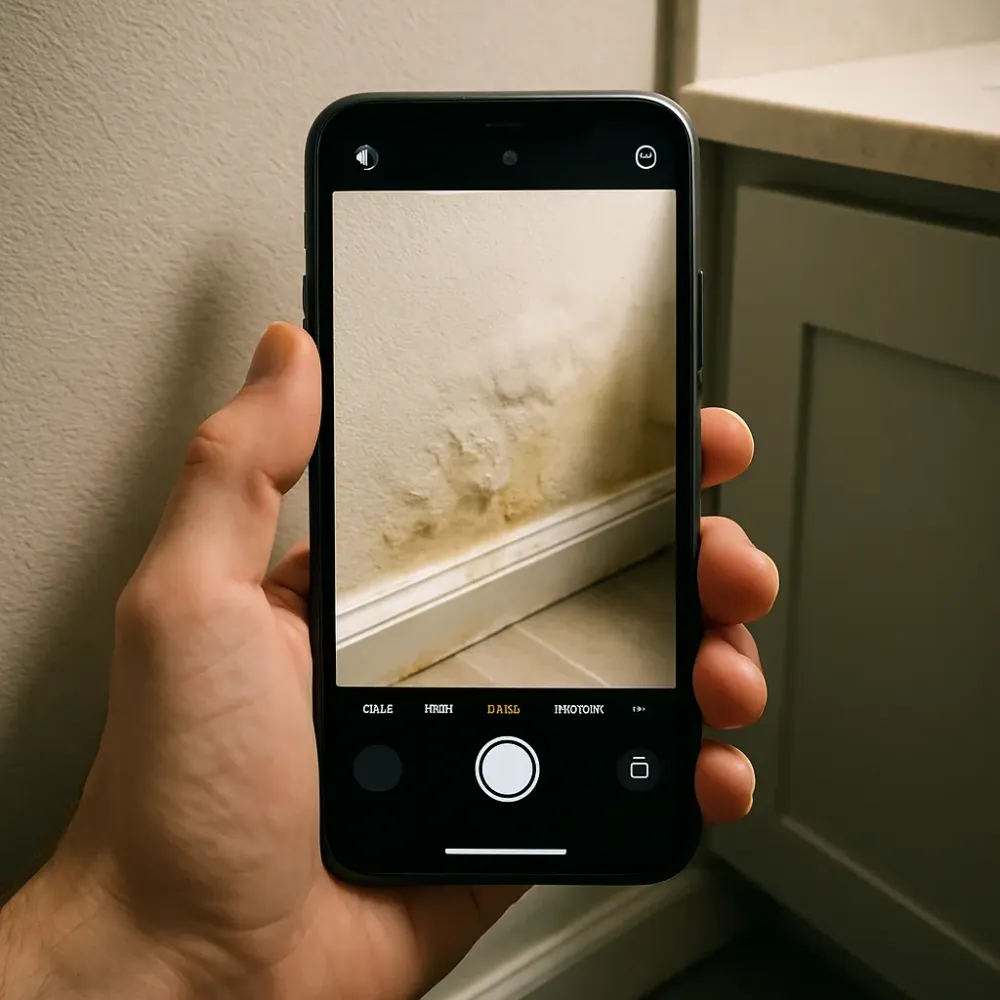
- Take photos of everything. Your phone’s camera is your friend right now. Shoot the water line on the walls, the damaged flooring, the source if you can see it.
- Open windows and interior doors to get air moving through the space.
- Call a professional for emergency water extraction. The sooner moisture gets pulled out, the less structural damage you’ll deal with later.
Most homeowners don’t realize the damage is already inside the wall by the time they see water on the floor. That’s why speed matters so much.
What NOT to Do
Panic makes people do strange things. We’ve shown up to Gilbert homes where someone tried to use a shop vac on three inches of water for two hours straight. Or they pulled up carpet thinking that would help, only to expose wet padding that spread the moisture further.
- Don’t use your regular vacuum on standing water
- Don’t turn on your HVAC system if ducts might be affected
- Don’t ignore water that “seems like it dried on its own”
That last one is the biggest mistake we see. Water disappears from the surface, people assume it’s fine. But moisture trapped in drywall and subfloor creates mold growth within 24 to 48 hours, according to the Environmental Protection Agency.
And here’s the thing about Gilbert’s climate. Our dry heat fools people into thinking evaporation handles everything. It doesn’t. Moisture gets trapped in wall cavities where desert air can’t reach it.
The photos you take during these first minutes become critical if you file an insurance claim later. Document the damage before you clean anything up, that evidence protects you down the road.
If you’re standing in a wet room right now and reading this on your phone, you’re already doing the right thing. Get the water stopped, get your stuff up off the floor, and reach out to our water damage restoration team so we can start structural drying before things get worse. Thirty minutes of smart action now saves you weeks of headaches later.
Document the Damage Before You Touch Anything
Your first instinct is to start cleaning up. Fight that urge.
Before you move furniture, pull up carpet, or mop a single drop, you need photos. Lots of them. This step matters more than most people realize, it can make or break your insurance claim later.
We see this mistake constantly in Gilbert. A homeowner comes home to a soaked kitchen floor from a burst pipe. They panic. They grab towels, start pulling things out, toss ruined items in the trash. By the time they call their insurance company, there’s almost no proof of how bad things actually were. And now they’re stuck arguing over what should be covered.
What to Photograph
Grab your phone. Start recording before you touch anything. Here’s what to capture:
- Wide shots of every affected room from the doorway
- Close-ups of where water entered or pooled
- Damaged walls, baseboards, and flooring at ground level
- Any personal items or furniture sitting in water
- The water source itself if you can safely see it
Take video too. Walk slowly through each space. Narrate what you see. “This is the hallway outside the master bath. Water is about half an inch deep.” That kind of detail helps adjusters understand the full picture.
But don’t just photograph the obvious stuff. Look up. Check ceilings for discoloration or sagging. Open closet doors. Peek behind furniture. Water travels in ways you wouldn’t expect, especially in Gilbert homes built on slab foundations where moisture can wick up through drywall fast.
Keep a Written Log
Photos are great. A simple written timeline is even better when paired with them.
Note the date and time you discovered the water damage. Write down what you think caused it. Record any steps you took and when. If you turned off the water main, note that. If you called for emergency water extraction, write down the time. This log becomes part of your claim file.
Most homeowners don’t realize the damage is already inside the wall by the time they see water on the floor. That’s why documenting everything visible right now matters so much. What you can see today might dry out and look fine tomorrow, but the real problems are hiding behind surfaces. Your photos become the proof that water was there.
A Quick Note About Safety
Document from a safe distance if the water looks deep or dark. Sewage backups happen during Gilbert’s monsoon season more than you’d think. Standing water near electrical outlets is a real hazard. Don’t wade into a flooded room just for a photo.
If something looks unsafe, stay back. A professional can assess the situation when they arrive. Your safety always comes first.
One more thing. Save everything. Don’t throw away damaged items until your insurance company or adjuster says it’s okay. We’ve had homeowners in the Val Vista Lakes area toss waterlogged belongings the same day, only to find out their policy would’ve covered contents restoration. That’s money left on the table because the evidence went to the curb.
So take the ten minutes. Photograph everything. Write it down. Then move on to the next step knowing you’ve protected yourself. If you’re already dealing with water damage and feeling overwhelmed, our water damage restoration page walks you through what comes next and how we can help.
Why Mopping Up Water Is Not the Same as Drying Out Water Damage
You grabbed every towel in the house. You ran the shop vac for an hour. The floor looks dry now. So you’re done, right?
Not even close.
This is the single biggest mistake we see Gilbert homeowners make after a water event. The visible water is gone, so people assume the problem is solved. But water doesn’t just sit on surfaces. It moves. It soaks into drywall, creeps under baseboards, and settles deep into your subfloor. What you mopped up was maybe 20 percent of the actual moisture in your home.
What’s Happening Behind the Walls
Think about a sponge sitting in a dish. Even after you pour the standing water out, that sponge stays wet for a long time. Your walls and floors work the same way. Drywall in particular acts like a wick, pulling moisture upward from the floor. We’ve measured moisture 18 inches above the visible water line in homes near the San Tan Village area after a burst pipe. The homeowner had no idea the damage reached that high.
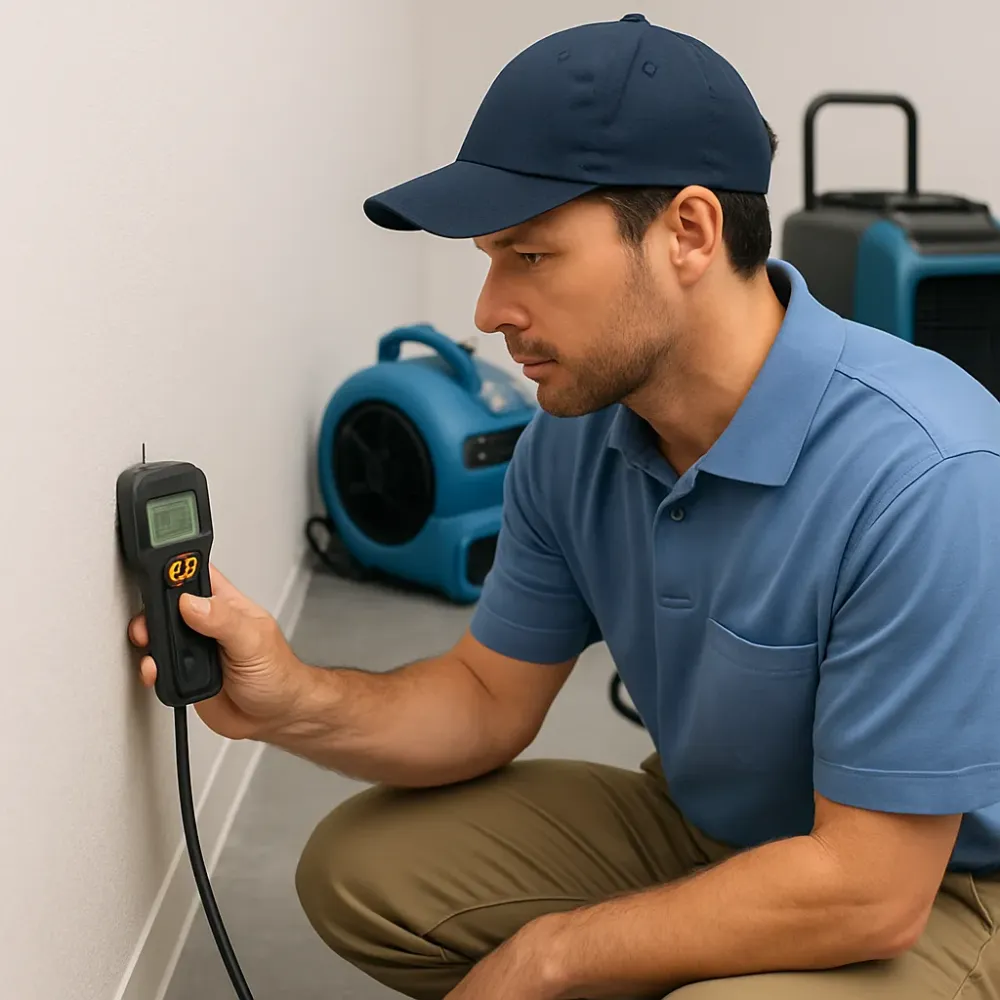
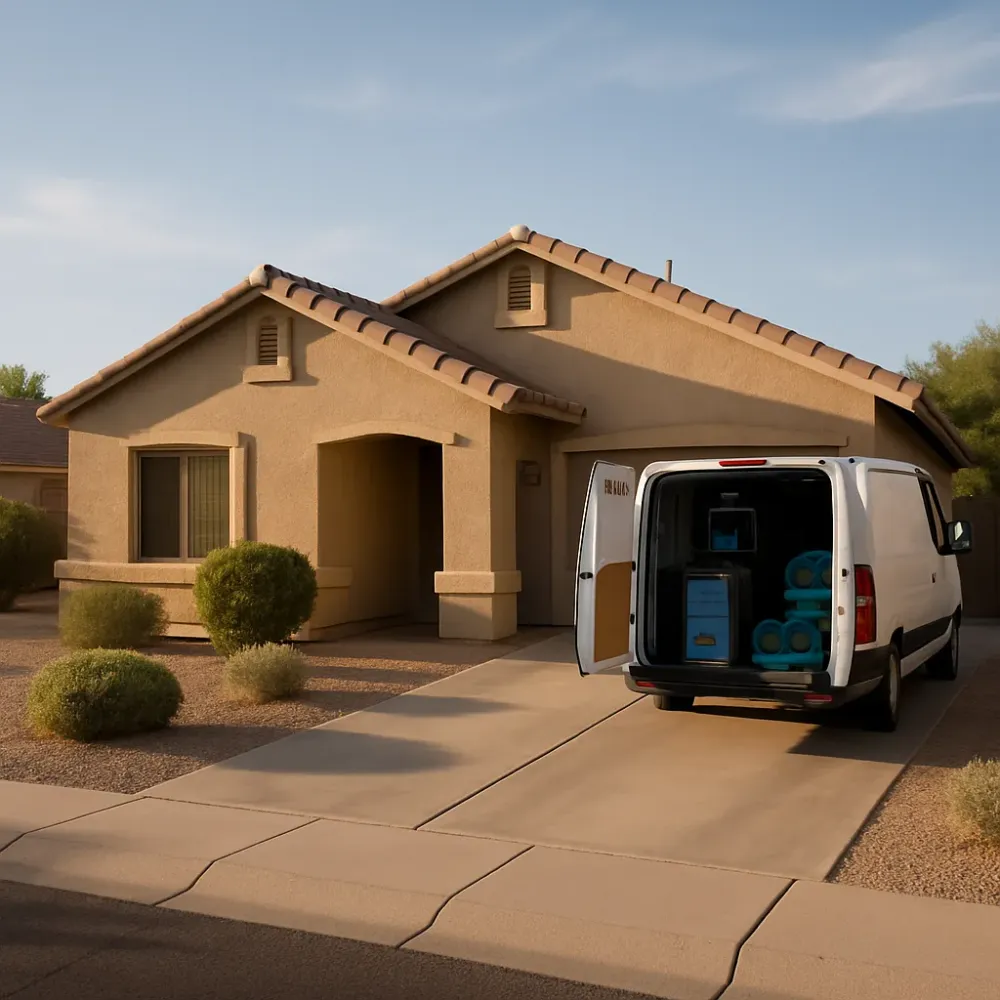
Structural drying is a completely different process from cleanup. It involves commercial-grade air movers, dehumidifiers, and moisture meters that track what’s happening inside materials you can’t see. Your ceiling fan and a box fan from the garage won’t get the job done, they just dry the surface layer while trapped moisture keeps doing damage underneath.
The 48-Hour Window That Matters Most
Here’s what most people don’t realize until it’s too late. Mold can start growing within 24 to 48 hours in warm, humid conditions. According to the Environmental Protection Agency, mold growth on wet materials is likely if drying doesn’t happen within that window. And Gilbert’s desert heat actually makes this worse during monsoon season. High outdoor temps push indoor humidity up fast once water gets inside a structure.
A few signs that water damage is still active even after you’ve cleaned up the visible mess:
- A musty smell that wasn’t there before, especially near baseboards or closets
- Soft or spongy spots when you walk across the floor
- Paint bubbling or wallpaper peeling on lower sections of walls
- Humidity that feels heavier than normal inside the house
Any one of these means moisture is still trapped somewhere. And every day it stays there, the damage gets worse.
What Proper Structural Drying Actually Looks Like
When we walk into a home for emergency water extraction, the first thing we do is take moisture readings. Not just on the wet floor. We check walls, cabinets, subfloor layers, even the backside of adjacent rooms. Water travels through shared walls constantly.
Then we set up a drying plan. That means placing equipment in specific spots based on the readings. We come back daily to re-measure and adjust. The goal isn’t just “it feels dry.” The goal is bringing every material back to its normal moisture content. That’s a number, not a feeling.
One family in the Power Ranch neighborhood thought they’d handled a toilet overflow on their own. Three weeks later they called us because their hardwood floors were cupping. By then, the subfloor needed replacement too. What would’ve been a straightforward structural drying job turned into hardwood floor water damage repair and weeks of disruption.
So if you’ve already mopped up and you’re wondering whether you really need professional help, ask yourself one question. Do you know what the moisture level is inside your walls right now? If the answer is no, you’re guessing. And guessing with water damage gets expensive fast.
If you’re dealing with water damage in your Gilbert home and want to understand your next steps, our water damage restoration page walks you through exactly what the process looks like from start to finish.
Frequently Asked Questions
Common questions about dealing with water damage? here’s exactly what to do next services in AZ
How does Gilbert’s dry heat affect water damage inside walls?
How does Gilbert’s dry heat affect water damage inside walls?Gilbert’s desert climate actually hides water damage instead of fixing it. Dry air evaporates surface moisture fast, so floors and walls look dry while moisture stays trapped inside wall cavities. That trapped moisture creates mold within 24 to 48 hours, according to the Environmental Protection Agency. You can’t feel or see it happening. Homes built on slab foundations — common throughout Gilbert — are especially prone to moisture wicking upward through drywall. Don’t assume the desert air handled it. If water got in, it needs professional extraction.
When should I call a professional instead of handling water damage myself?
When should I call a professional instead of handling water damage myself?Call a professional any time water has been sitting for more than an hour, touched drywall, or came from an unknown source. A shop vac and fans can handle a small surface spill. They cannot pull moisture out of subfloor, insulation, or wall cavities. If you can see a water line on your walls or baseboards, the damage is already deeper than the surface. Structural drying requires commercial equipment. Waiting even a few extra hours increases the risk of mold growth and structural damage significantly.
What’s the biggest mistake homeowners make right after discovering water damage?
What’s the biggest mistake homeowners make right after discovering water damage?The biggest mistake is cleaning up before documenting the damage. Homeowners panic, grab towels, throw out ruined items, and pull up carpet — then have almost no proof when they file an insurance claim. Adjusters need to see what the damage actually looked like. Take wide-angle photos, close-ups of the source, video walkthroughs, and a written log with dates and times before you move a single piece of furniture. That evidence protects your claim and your wallet later.
Does homeowner’s insurance usually cover water damage from a burst pipe?
Does homeowner’s insurance usually cover water damage from a burst pipe?Most standard homeowner’s insurance policies cover sudden and accidental water damage, like a burst pipe, but not gradual leaks or flooding from outside. The key word is “sudden.” A slow drip behind a wall that went unnoticed for months is often denied. That’s why documenting the damage immediately matters so much. Clear photos and a written timeline showing when you discovered the water help your adjuster understand the event was unexpected. For more guidance on what restoration involves, visit our water damage restoration page.
How quickly does mold start growing after water damage?
How quickly does mold start growing after water damage?Mold can begin growing within 24 to 48 hours of water exposure, according to the Environmental Protection Agency. It doesn’t need much — just moisture, warmth, and an organic surface like drywall or wood. Gilbert’s warm temperatures year-round actually speed that timeline up. Mold often starts inside wall cavities where you can’t see it. By the time you spot discoloration or smell something musty, growth is already underway. Fast water extraction and structural drying are the only reliable ways to stop it before it starts.
Are Gilbert homes built on slab foundations more vulnerable to water damage?
Are Gilbert homes built on slab foundations more vulnerable to water damage?Yes, slab foundation homes — which are very common in Gilbert — face a specific water damage risk. When moisture gets under or around a slab, it wicks upward through drywall and flooring faster than you’d expect. Homes near the Val Vista and Guadalupe Road corridor are especially prone to this because shifting soil puts stress on pipes over time. You may not see standing water, but moisture is still moving through your walls. A professional assessment is the only way to know how far the damage has traveled.
Ready to Get Started?
Call now. Call +1-480-956-3500 today.